
Astronomers have moved from merely detecting planets around other stars to describing their weather, and the latest observations read like a forecast for worlds no human will ever visit. By analysing starlight that filters through a planet’s atmosphere during transit, large telescopes can identify water vapour, carbon compounds and even high-altitude clouds, while repeated observations reveal winds strong enough to shift the chemical signatures. On the hottest gas giants, teams have mapped temperature differences between the day and night sides and inferred jet streams that carry heat around the planet at thousands of kilometres per hour. Smaller rocky worlds remain far harder targets, but patient campaigns are beginning to test whether they hold atmospheres at all. Each result depends on subtracting the overwhelming glare of the parent star, a feat of instrumentation and data analysis that has matured remarkably quickly, turning exoplanet climatology from speculation into an observational science with error bars and disagreements like any other.
What the Evidence Shows
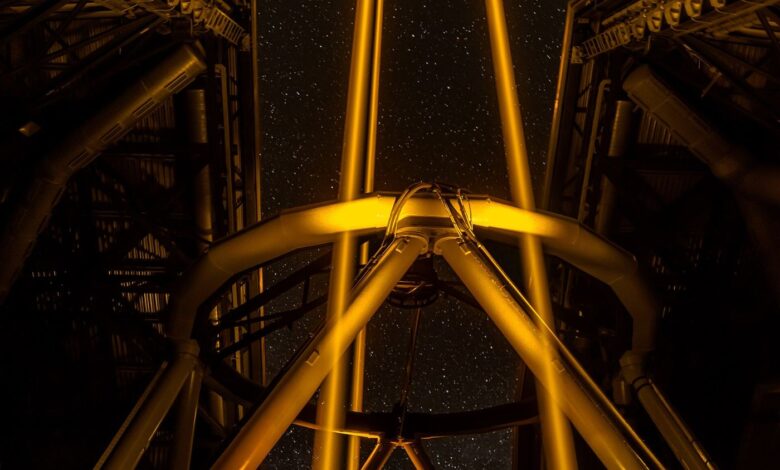
The next generation of extremely large telescopes is expected to transform the field by collecting enough light to study the atmospheres of temperate, Earth-sized planets directly. Instrument builders are designing spectrographs stable enough to detect the tiny wobble of starlight caused by molecules such as oxygen and methane, while theorists warn that interpreting any single gas as a sign of life will require context about the whole atmosphere and the planet’s geology. In the meantime, researchers are building three-dimensional climate models of alien worlds and testing them against the growing catalogue of observations, much as terrestrial meteorology developed by comparing models with weather data. Surprises are frequent: clouds where none were predicted, atmospheres stripped by stellar storms and chemistry driven far from equilibrium. For astronomers, those surprises are the point. A science that can be surprised by its subjects is one that has finally begun to observe them properly, rather than imagining them. Reporting and analysis from sources such as NASA track the same developments, and specialists following exoplanet atmosphere weather observations say the direction is now consistent across independent lines of evidence.
The Wider Context
Funding bodies are watching exoplanet atmosphere weather observations closely because the work sits at the junction of basic curiosity and practical return. Grant panels increasingly ask for a path from discovery to application, while researchers push back that the most valuable uses of fundamental science are rarely the ones written into the original proposal. The tension is productive when both sides stay honest about timescales.
What Happens Next
The long view on exoplanet atmosphere weather observations is that fields advance by accumulation rather than by single announcements. This result adds a solid, checkable piece to a structure many teams are building, and its authors have shared their data so the piece can be tested from every side. That is how the picture eventually becomes reliable enough to act on. You can follow related developments in our coverage of science.
It is also worth remembering how quickly the picture in this area has changed before. Positions that looked settled a few years ago have been revised as new data arrived, and the same humility is appropriate now. The strongest coverage of this subject, and the most useful advice, tends to come from sources that update their views openly when the facts move, rather than defending an earlier position long after it has stopped fitting the evidence available.